
Professional Packing Services vs. DIY: What You Need to Know
You are standing in your living room two weeks before moving day, looking at three decades of accumulated furniture, dishes, books, and electronics, and wondering whether paying for professional packing is actually worth it or whether you and a few rolls of bubble wrap can handle things on your own. It is one of the most common questions we hear on every pre-move consultation in Conroe. The honest answer is: it depends on what you are moving, how much time you realistically have, and what a damaged 65-inch television or a cracked antique mirror would cost you to replace. After 25 years of moving families across Montgomery County, we have seen both approaches succeed, and both approaches fail. What follows is the clearest breakdown we can give you.
What Professional Packing Actually Involves?
Most people picture professional packing as someone wrapping dishes in paper. The reality is considerably more systematic than that. A trained packing crew works from a specific sequence: fragile and high-value items first, room-by-room inventory as they go, load-bearing boxes built with weight distribution in mind, and labeling that tells the unloading crew exactly where each box lands in the destination home.
We use double-wall boxes for anything exceeding 30 pounds. Electronics get anti-static foam before a single piece of tape goes on the box. Artwork and mirrors get custom crating when dimensions exceed 24 inches on any side. On a standard three-bedroom home in Conroe, a two-person packing crew typically finishes in four to six hours. That same job takes most homeowners two to three full days, and the packing quality at hour 14 of a DIY session is measurably worse than at hour one.
There is also the materials question. Professional crews bring the right box sizes in quantity. One of the most consistent damage patterns we see on moves where customers packed themselves is the wrong box size: heavy items in large boxes, which flex at the bottom and collapse on the truck, and light fragile items in small boxes packed too tightly with no internal cushioning layer.
What DIY Packing Gets Right (and Where It Breaks Down)
DIY packing works well in specific, defined scenarios. If you are moving a one-bedroom apartment, you have two full weekends before the move date, and your belongings are mostly clothing, books, and non-fragile furniture, the financial case for professional packing is weaker. You can pack clothing in wardrobe boxes, books in small boxes at 30 pounds or less, and basic kitchen items with standard dish pack paper without technical difficulty.
Where DIY packing breaks down predictably:
- Artwork, mirrors, and framed pieces require corner protection, face wrapping, and edge boarding. Without those three elements, even a short move across Conroe produces surface scratches, cracked glass, and frame separation at the joints.
- Furniture disassembly is a different skill than packing. Many homeowners disassemble a bed frame or bookshelf correctly but lose the hardware or fail to wrap the panels, which then scratch against each other in the truck.
- Electronics are the highest-risk DIY category. Original manufacturer boxes are the safest option when available. When they are not, the foam configuration inside those boxes took engineering to design. Improvised padding with clothing or newspaper does not replicate that, and a 10-minute stop on I-45 with hard braking can shift an improperly packed television enough to crack the screen internally.
TIP: Before you begin any DIY packing, do a room-by-room inventory list grouped by fragility level: everyday items, moderate-care items, and high-value or fragile items. Pack only the everyday category yourself and get a professional opinion on everything in the other two groups. This single step prevents the majority of damage claims we process.
WARNING: If you are packing items for a long-distance move rather than a local Conroe relocation, the physics change significantly. A box that survives a 15-minute drive across town will experience multiple hours of road vibration, temperature variation, and load shifting on a long-distance haul. DIY packing standards that work locally are often insufficient for anything over 200 miles.
The Real Decision Framework: 6 Factors That Should Drive Your Choice
1. Volume and complexity of belongings
A two-bedroom home with standard furniture and minimal fragile items is a reasonable DIY packing project. A four-bedroom home with a full kitchen, a home office, collectibles, or antiques is not.
2. Time available before the move
Underestimating packing time is the single most consistent source of moving-day chaos we see in Conroe. Most people budget one full day and need three. If your move date has less than two weeks of lead time, professional packing removes that variable entirely.
3. Physical condition and help available
Packing requires repeated bending, lifting, and floor-level work for hours at a time. If you are doing this alone or with one helper, factor in realistic stamina. Professional crews work in coordinated pairs and rotate tasks specifically to maintain speed and accuracy across a full job.
4. The climate factor specific to Conroe
Southeast Texas humidity averages above 75 percent for a significant portion of the year. Cardboard exposed to that humidity for more than 48 hours begins to lose structural integrity. Professional crews in this area account for that by sealing boxes immediately after packing and staging packed items away from exterior walls and garages. DIY packers who start a week early and store boxes in an unair-conditioned garage often arrive on move day with weakened boxes that fail under load.
5. Value density of your belongings
Calculate the replacement value of your five most expensive or irreplaceable items. If that number is significant to you, that is the practical case for professional packing. Insurance covers documented damage but rarely accounts for sentimental value or the disruption of filing a claim.
6. Moving locally versus long distance
Local moves within Conroe and Montgomery County give you the option to make multiple trips, which reduces the consequences of imperfect packing. Long-distance moves do not. The longer the distance, the stronger the argument for professional packing on fragile and high-value categories even if you handle everyday items yourself.
The Hybrid Approach: What Most Experienced Movers Actually Do
After 25 years of pre-move consultations, the option that makes the most practical sense for most Conroe families is a hybrid. Pack your own clothing, books, linens, and clearly non-fragile items. Let the professional crew handle the kitchen, electronics, artwork, mirrors, and anything that would be painful or impossible to replace.
This approach typically reduces the professional packing time by 40 to 50 percent compared to a full-service pack, keeps the overall cost lower, and gives you meaningful participation in the process without putting your most vulnerable belongings at risk.
It also allows you to stay involved in the organization of your own move. Many homeowners want to personally handle sentimental items, family documents, and jewelry regardless of the packing method they choose for everything else. A hybrid setup accommodates that naturally.
What to Ask Any Packing Service Before You Book
Not all packing services operate at the same standard. Before you confirm a packing crew, ask these specific questions:
- Do they bring their own materials or bill materials separately? Many operations quote a packing labor rate and then add materials at delivery, which changes the total significantly.
- What is their damage policy and how is it documented? You want written inventory with condition notes before anything goes into a box.
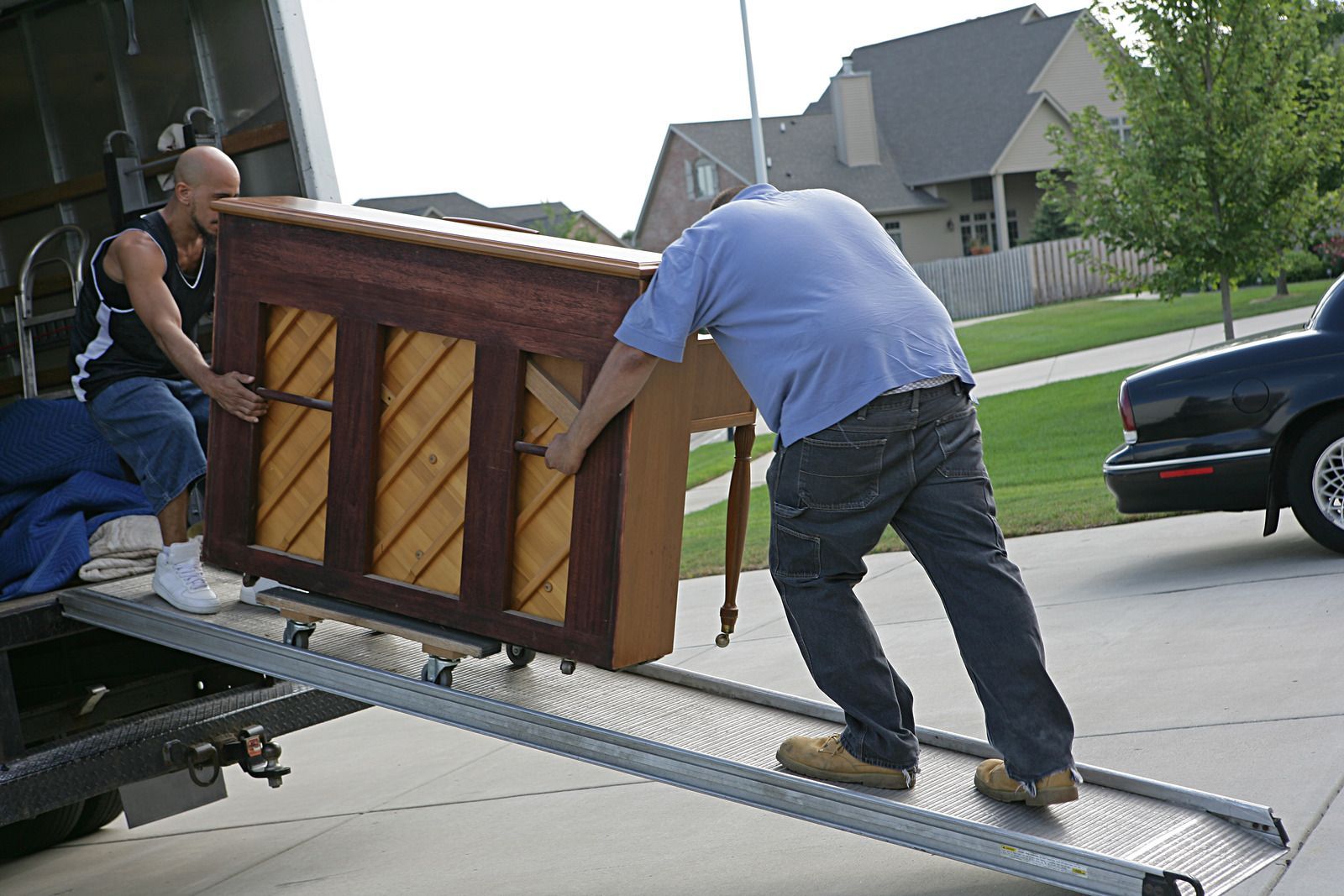
- Do they have experience with specialty items relevant to your move? Pianos, pool tables, gun safes, and large aquariums each require specific handling knowledge that not every crew has.
- Are they the actual packing crew or a subcontracted team? This matters for accountability and consistency of quality.
At Conroe Moving, our packing teams are the same crews who load and unload the truck. They packed it, so they know exactly how to handle it. That continuity matters more than most people realize when something needs careful repositioning mid-move.
Expert Packing Services Built Around Your Moving Timeline
The core principle is straightforward: the quality of your packing determines how much of your move is under your control. In Conroe, where summer heat and high humidity can weaken boxes within 48 hours and where peak-season truck demand means no margin for repacking errors, getting packing right the first time matters more than it might in a drier climate. Conroe Moving has served families across The Woodlands, Magnolia, Montgomery, Willis, and Huntsville for 25 years. If you want a crew that packed the truck to also unload it, call us before your move date is set.
Faqs
Is professional packing worth it for a local move within Conroe?
Distance does not protect fragile items. Dishes packed without proper cushioning break on a 10-minute drive just as easily as a 10-hour one. If your move includes a full kitchen, electronics, or artwork, professional packing eliminates the most common source of damage claims. For a minimally furnished apartment with mostly soft goods and books, DIY is reasonable.
How far in advance should I schedule professional packing in Conroe?
Moving demand in Conroe and the greater Houston area peaks between May and August. During that window, crews book two to three weeks out, especially for weekends. Book at least three weeks ahead for summer moves. Fall and winter moves generally need one to two weeks of lead time.
What items should I always pack myself regardless of whether I hire professionals?
Prescription medications, legal documents, passports, jewelry, and anything with irreplaceable sentimental value should travel with you in your personal vehicle. No responsible mover guarantees the security of high-value personal items placed in the load. Keep those out of the truck entirely.
How does Conroe's humidity affect packed boxes before the move?
Montgomery County humidity exceeds 75 percent for large portions of spring and summer. Cardboard begins absorbing moisture within 24 to 48 hours in those conditions, which weakens box walls and reduces load capacity. Store packed boxes inside an air-conditioned space, not in a garage or storage room, and stack no more than four boxes high.
Can I use my own boxes for a professional pack?
Used boxes are acceptable for clothing, linens, and books. For fragile items, professional crews use new boxes because used ones have compromised corner strength and flaps that no longer seal tightly. If you source your own materials, use new double-wall boxes for the kitchen and electronics. Your crew should inspect any customer-supplied boxes before packing begins.
What is the difference between a full-service pack and a partial pack?
A full-service pack covers every room, closet, and storage area in the home. A partial pack means you designate specific rooms or item categories for the crew and handle the rest yourself. Partial packing most commonly covers the kitchen, electronics, and specialty items. Get the agreed scope in writing before packing day to avoid schedule delays from scope misunderstandings.
What happens if something is damaged during a professionally packed move?
When the crew packs an item and it sustains damage, liability is clearer than for a self-packed item. Most contracts hold the mover responsible for packing quality on crew-packed items, while damage to customer-packed items typically falls under released value coverage at a fraction of replacement cost. Read the liability section of any moving contract carefully before signing.